
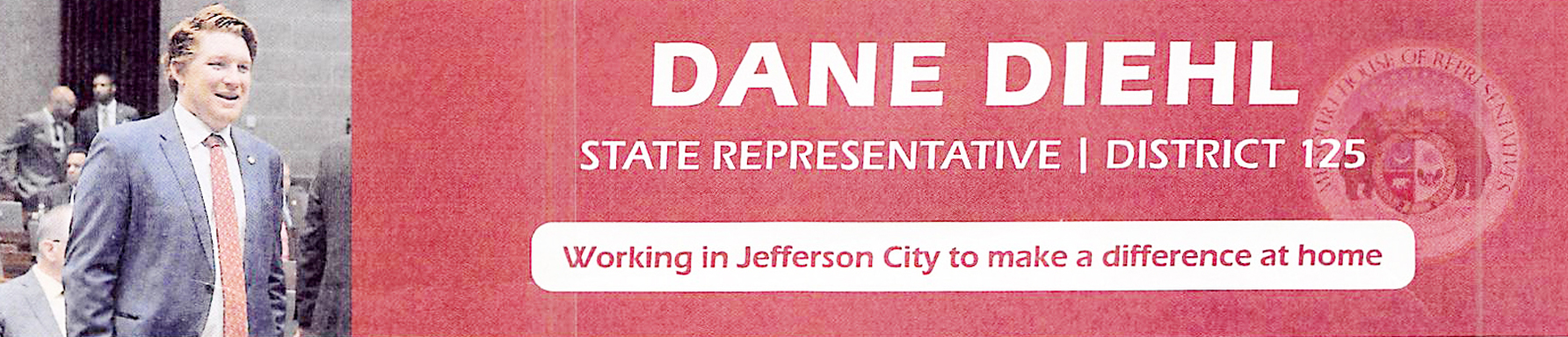
 The week before legislative spring break is upon us. For me, that means returning to the great 125th district, attending events, working, and catching up on issues brought to my attention by my constituents.
The busy nature of the legislature this time of year is one I embrace and enjoy. Many of the state representatives across the state are working through the legislative process in the House in hopes their legislation will make it to the Missouri Senate.
This week, I had the privilege of presenting my HB 2710 to my colleagues on the House floor. I am proud to report it passed in the Missouri House with a vote of 96-53.
I have had many conversations across the district about HB 2710 and what changes it will make. The bill relates to public education and directs the Missouri Department of Elementary Education (DESE) to develop a grading system for schools across the state. It uses the same standard our students are accustomed to in a grading system of A-F, utilizing metrics that are currently collected through DESE. It also adds a new metric to account for growth in grade levels. This metric will track students over a period of time to make sure those students are making progress in literacy, language arts, math, and science. It also allows the department flexibility for implementation and directs how it will be accessed by parents and the public across the state.
I am very proud of every school district in our district and the state. It is my belief this will be positive for our public schools by highlighting the schools that are excelling, allow adjustments for those that need improvement, and promote engagement on all levels across school districts.
The success other states have seen after implementing this system is quite impressive. As a part of other educational legislation, I do believe HB 2710 will assist in improving student proficiency levels. For anyone interested in researching, do a Google search “Mississippi Miracle.” You will find highlights of their similar grading system. The state of Louisiana implemented a similar program in 1999.
More information on House Bill 2710 can be found below along with other important bills that were heard this week.
The support, visits, and guidance the 125th district has shared with me is appreciated. I am dedicated to serving all my constituents in Bates, Vernon, and Cedar Counties. Please stop by office 114 if you are near Jefferson City or contact my office with any questions or concerns.
Rep. Dane Diehl, 125th District
Missouri Legislature Passes Supplemental Budget to Fund Current State Operations
Missouri lawmakers this week gave approval HCS HB 2014, the state’s supplemental budget bill, providing additional funding to state agencies and programs for the remainder of the current fiscal year. Supplemental budgets are used to cover costs that exceed original projections, including program expenses, grant obligations, and required fund transfers. The legislation appropriates approximately $3.1 billion for the fiscal year ending June 30, 2026.
Major spending items in the bill include:
• $1 billion for disaster recovery efforts in St. Louis and other areas impacted by tornadoes and storms in 2025. • $635 million for the Department of Transportation Road program. • $100 million of the $216 million Missouri received for the Rural Health Transformation Program.
With approval from both chambers, HCS HB 2014 now heads to Governor Mike Kehoe to be signed into law, making it the first piece of legislation this year to reach his desk.
House Advances Comprehensive Property Tax Reform
The Missouri House passed HCS HBs 2780 & 2668, a wide-ranging bill that changes how property taxes are presented to voters, assessed, and adjusted. The legislation requires clearer, standardized ballot language for property tax questions. Local governments will no longer be allowed to label proposals as “no tax increase” measures. Tax questions must show the dollar impact based on a property’s assessed value, and most property tax questions must appear on the November general election ballot. The bill updates property assessment rules, including:
• Short-term rental single-family homes remain classified as residential property. • Assessors must conduct a physical inspection before raising a property’s assessed value by more than 15% since the last
assessment. • “True value in money” is defined as the replacement cost of the property and improvements.
The measure also changes how local governments calculate and adjust tax rates. Political subdivisions will now set rates for each subclass of real property individually and for personal property in the aggregate, removing outdated requirements to compare multiple levies to a single- rate baseline. Levy increases must remain revenue neutral under the Missouri Constitution, and temporary levy increases will expire unless voters approve a permanent increase.
The legislation strengthens property tax credit protections, ensuring that eligible seniors receiving the homestead credit no longer need to reapply each year, and requiring counties to apply credits fairly and consistently. Additional provisions allow township counties to offer installment payment options for property taxes and lower the operating levy floor for school districts to receive certain state aid beginning in the 2026–27 school year.
With a vote of 133-13, this legislation now moves to the Senate for further consideration.
House Advances Annual School Accountability Report Card
Parents and the public would gain a clearer view of school performance under HCS HB 2710, which would create a new, structured statewide school accountability system and grading scale for Missouri public schools and districts. The bill requires the State Board of Education to produce an annual accountability report card for each public school and district. These reports will meet federal reporting requirements and include detailed performance data on students, staff, and finances. Schools will receive an embargoed copy by September 15, allowing time to appeal before final publication on October 31.
Under the bill, schools and districts would be scored on a 0–100 scale, converted into A–F letter grades. Ratings will reflect academic achievement and growth in English, math, and science through the Missouri Assessment Program, a value-added growth metric, and the “Success Ready Graduate” measure developed by the Missouri Department of Elementary and Secondary Education (DESE). Schools testing fewer than 95% of students must clearly disclose their participation rate.
The bill also establishes the “Show Me Success Program,” which provides performance-based funding to schools demonstrating strong growth, sustained improvement, or success in closing achievement gaps. Funds must be used to support teacher recruitment and retention. Special school districts and state-operated schools serving only students with disabilities are exempt from the report card requirement.
In addition to academic performance, the bill introduces a school climate rating on a 0–100 scale, with four equally weighted factors contributing 25% each. These factors include, but are not limited to, incidents of suspension, seclusion, and restraint, as well as surveys of parents, teachers, and students. Following a vote of 96-53 in the House, the bill now heads to the Senate for further consideration.
House Advances Statewide Expansion of Agricultural Education
Agriculture education in Missouri elementary schools would move beyond a limited pilot program under HCS HBs 2097 & 1905, approved by the House this week. Beginning in the 2027–28 school year, the Department of Elementary and Secondary Education may implement the program statewide in any elementary school that elects to participate. The legislation also eliminates the requirement to submit reports to legislative committees and instead requires updates to be posted on the Department’s website. The change is designed to broaden access while simplifying reporting requirements.
Missouri Legislature Passes Supplemental Budget to Fund Current State Operations
Missouri lawmakers this week gave approval HCS HB 2014, the state’s supplemental budget bill, providing additional funding to state agencies and programs for the remainder of the current fiscal year. Supplemental budgets are used to cover costs that exceed original projections, including program expenses, grant obligations, and required fund transfers. The legislation appropriates approximately $3.1 billion for the fiscal year ending June 30, 2026.
Major spending items in the bill include: • $1 billion for disaster recovery efforts in St. Louis and other areas impacted by tornadoes and storms in 2025.
• $635 million for the Department of Transportation Road program. • $100 million of the $216 million Missouri received for the Rural Health Transformation Program.
With approval from both chambers, HCS HB 2014 now heads to Governor Mike Kehoe to be signed into law, making it the first piece of legislation this year to reach his desk.
House Advances Comprehensive Property Tax Reform
The Missouri House passed HCS HBs 2780 & 2668, a wide-ranging bill that changes how property taxes are presented to voters, assessed, and adjusted. The legislation requires clearer, standardized ballot language for property tax questions. Local governments will no longer be allowed to label proposals as “no tax increase” measures. Tax questions must show the dollar impact based on a property’s assessed value, and most property tax questions must appear on the November general election ballot. The bill updates property assessment rules, including:
• Short-term rental single-family homes remain classified as residential property. • Assessors must conduct a physical inspection before raising a property’s assessed value by more than 15% since the last
assessment. • “True value in money” is defined as the replacement cost of the property and improvements.
The measure also changes how local governments calculate and adjust tax rates. Political subdivisions will now set rates for each subclass of real property individually and for personal property in the aggregate, removing outdated requirements to compare multiple levies to a single- rate baseline. Levy increases must remain revenue neutral under the Missouri Constitution, and temporary levy increases will expire unless voters approve a permanent increase.
The legislation strengthens property tax credit protections, ensuring that eligible seniors receiving the homestead credit no longer have to reapply each year, and requiring counties to apply credits fairly and consistently. Additional provisions allow township counties to offer installment payment options for property taxes and lower the operating levy floor for school districts to receive certain state aid beginning in the 2026–27 school year.
With a vote of 133-13, this legislation now moves to the Senate for further consideration.
House Advances Annual School Accountability Report Card
Parents and the public would gain a clearer view of school performance under HCS HB 2710, which would create a new, structured statewide school accountability system and grading scale for Missouri public schools and districts. The bill requires the State Board of Education to produce an annual accountability report card for each public school and district. These reports will meet federal reporting requirements and include detailed performance data on students, staff, and finances. Schools will receive an embargoed copy by September 15, allowing time to appeal before final publication on October 31.
Under the bill, schools and districts would be scored on a 0–100 scale, converted into A–F letter grades. Ratings will reflect academic achievement and growth in English, math, and science through the Missouri Assessment Program, a value-added growth metric, and the “Success Ready Graduate” measure developed by the Missouri Department of Elementary and Secondary Education (DESE). Schools testing fewer than 95% of students must clearly disclose their participation rate.
The bill also establishes the “Show Me Success Program,” which provides performance-based funding to schools demonstrating strong growth, sustained improvement, or success in closing achievement gaps. Funds must be used to support teacher recruitment and retention. Special school districts and state-operated schools serving only students with disabilities are exempt from the report card requirement.
In addition to academic performance, the bill introduces a school climate rating on a 0–100 scale, with four equally weighted factors contributing 25% each. These factors include, but are not limited to, incidents of suspension, seclusion, and restraint, as well as surveys of parents, teachers, and students. Following a vote of 96-53 in the House, the bill now heads to the Senate for further consideration.
House Advances Statewide Expansion of Agricultural Education
Agriculture education in Missouri elementary schools would move beyond a limited pilot program under HCS HBs 2097 & 1905, approved by the House this week. Beginning in the 2027–28 school year, the Department of Elementary and Secondary Education may implement the program statewide in any elementary school that elects to participate. The legislation also eliminates the requirement to submit reports to legislative committees and instead requires updates to be posted on the Department’s website. The change is designed to broaden access while simplifying reporting requirements.


Facebook Comments