
Voices Worth Hearing
 The radio was always on when I was growing up—in the house or shop, on farm equipment, and even the hog house. More often than not, it was tuned to KMA radio out of Shenandoah, Iowa. That signal carried market prices, weather forecasts, voices we trusted, and information that mattered long before I understood why. I learned early there were certain moments in the day that carried weight, especially when the midday farm report came on. That’s when Dad would raise his voice just enough to cut through whatever was happening with a single word of instruction: “Listen!”
He didn’t say “be quiet” or even “shut up,” just the one word. It was a small thing, but I didn’t realize at the time how important that word choice was. He wasn’t stopping us from talking—he was directing our attention. He was telling us that something worth hearing was being shared. That lesson stuck with me. I may not have understood futures markets or basis levels, but I did understand that the person on the other end of that microphone mattered. I didn’t know it then, but that lesson would eventually follow me to the University of Missouri, and a man named Joe Marks.
My first semester of college didn’t go the way I planned. I started in ag engineering, but it wasn’t clicking. One day my Ag 101 instructor, Dr. Jan Dauve, asked a simple question: What do you like doing? When I said speaking and writing, he picked up the phone and called Joe Marks—a professor and news director for agricultural research and extension. A short walk across campus later, I met Joe in Whitten Hall.
Joe was upbeat, sharp, and easy to talk to. When he heard my background of being a farm kid, FFA, and public speaking, he suggested something I hadn’t seriously considered: farm broadcasting. Joe believed deeply in its importance. He told stories about his own start, including a summer internship working with a young broadcaster named Orion Samuelson, years before Orion became a household name at WGN Radio.
But Joe didn’t just talk. He acted, lining up an internship with News Bites, the university’s radio service. He took me to KRES radio in Moberly to meet their farm broadcaster. He encouraged me to apply for the newsroom at the National FFA Convention— an experience that led directly to my first convention of farm broadcasters, and, ultimately, a career.
Along the way, he gave advice I didn’t always understand at the time, like insisting I take acting and voice classes.
“One morning,” he told me, “you’ll stub your toe getting out of bed, trip on your way out the door, and the day will just keep getting worse. But you’ll still have to turn on the microphone and tell your listeners it’s a great day.”
He was right. Joe was more than an advisor. He was an encourager, and later my friend. After I left campus, he invited me back every fall to speak to his Intro to Ag Journalism class and broadcast my midday report live from his office. We always went to lunch. His door was always open.
Joe was an avid runner—marathons, road races, always smiling. When injuries slowed him down, he took up cycling with the same joy he brought to everything else.
Just after New Year’s Day in 1999, I got a phone call. Joe had fallen while putting away Christmas decorations and broken some ribs. That sounded like Joe—smiling through the pain, cracking jokes with the nurses. Then came the part that still catches in my throat. During a walk at the hospital, one of the ribs severed an artery that hadn’t shown up on x-rays. He was gone in seconds. He was 61. He planned to retire at the end of the semester.
I don’t remember our last conversation. I wish I did.
But I remember his belief. In broadcasting, yes, but more importantly, in people. Joe Marks knew how to help someone find their voice. And he knew when to tell them to listen. I wouldn’t be where I am today without him.
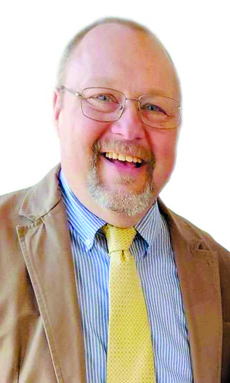
Tom Brand writes stories rooted in faith, family, and small-town life. He is the author of Welts on Your Butt a Calf Could Suck and I Never Heard of Johnny Fry, available at www.RichardsonPress.com. He remains grateful for the voices that guide us, the people who believe in us, and the lessons that stay long after the conversation ends.


Facebook Comments