
 Why Missouri Is Watching Screwworm
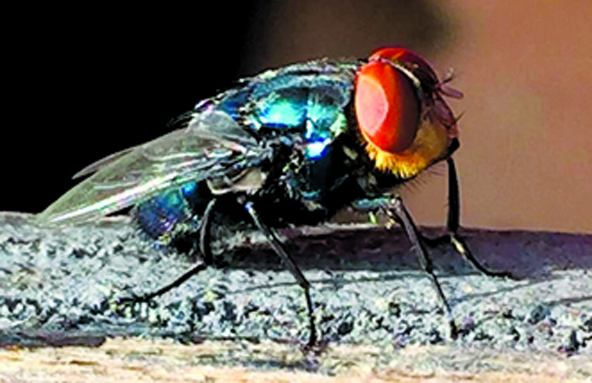 The New World Screwworm fly is recognized by its orange eyes and metallic blue-green body. Although Missouri has no confirmed cases, agricultural officials are closely monitoring its spread. Photo courtesy of USDA.
For decades, New World Screwworm was considered one of agriculture’s greatest success stories. Through a massive cooperative effort, the pest was eliminated from the United States and pushed far south into Central America. Most livestock producers never expected to hear about it again. That changed when recent detections moved closer to the United States and renewed concern among agricultural agencies.
Unlike common flies, New World Screwworm presents a much different threat. Most fly larvae feed on dead or decaying material. Screwworm larvae feed on living tissue. That single difference is what makes this pest such a serious concern for livestock producers and animal health officials.
When an adult female screwworm finds a wound, she lays eggs around the affected area. Once the larvae hatch, they begin feeding on the living tissue surrounding the wound. As the infestation grows, the injury becomes larger and more severe. Without treatment, the results can be devastating for the affected animal.
The United States spent decades and hundreds of millions of dollars eliminating screwworm. One of the most successful tools involved releasing sterile male flies into affected areas. Over time, the screwworm population collapsed because females could no longer reproduce successfully. The program became one of the most successful pest eradication efforts in American history.
Today, Missouri has no confirmed screwworm infestations. That fact is important. The concern is not what is happening in Missouri today. The concern is preventing Missouri from dealing with the problem tomorrow.
Agriculture remains a major part of life across Missouri. Cattle operations, horse owners, sheep producers, goat producers, and wildlife managers all have a stake in animal health. A pest capable of damaging livestock quickly becomes more than a farm issue. It becomes an economic issue affecting entire communities.
The recent detections have prompted state and federal agencies to review preparedness plans. Veterinarians, livestock organizations, and agricultural officials are sharing information and monitoring developments closely. That response is exactly what should happen. Preparation is always more effective than scrambling after a problem arrives.
One thing I have learned over the years is that successful producers pay attention to small changes. They notice injuries, unusual behavior, and developing health concerns. That habit often prevents larger problems later. The same mindset applies to screwworm awareness.
Livestock owners should not panic, but they should remain informed. Animals with wounds should be monitored carefully. Any unusual infestation, worsening wound, or unexplained tissue damage deserves immediate attention. Early detection remains one of the most important defenses available.
This issue also serves as a reminder of how interconnected agriculture has become. Diseases, invasive species, and agricultural pests do not recognize state lines. What begins hundreds of miles away can eventually affect producers much closer to home. That reality makes vigilance important.
Most Missouri residents will never personally encounter New World Screwworm. Even so, many benefit from the work of local farmers and ranchers every day. Protecting livestock helps protect food production, local economies, and rural communities. The impact extends far beyond the pasture.
At this point, screwworm remains something Missouri is watching, not something Missouri is fighting. That is an important distinction. Staying informed, remaining prepared, and responding quickly to legitimate concerns gives producers their best chance of keeping it that way. Awareness today may help prevent much larger problems tomorrow.


Facebook Comments