
From the El Dorado Springs Newsroom
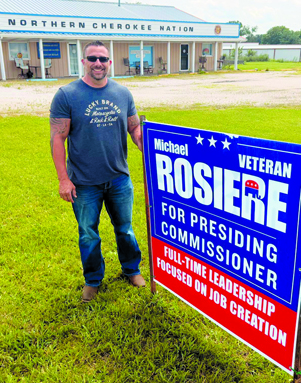 As Election Day draws closer, campaign season across all of Missouri has entered its most heated stage. Mailboxes are filled with campaign literature, social media feeds are flooded with political posts, and local online groups have become battlegrounds where facts, opinions and accusations often collide.
For many voters, this election has become a reminder that campaigning has changed dramatically. While traditional yard signs, candidate forums and newspaper interviews still play an important role, much of today’s political debate now happens online, where information can spread in seconds, and misinformation can spread just as quickly.
Social media has become one of the most powerful campaign tools available to candidates and their supporters. It allows candidates to speak directly to voters without relying on traditional media, announce events, livestream town halls, and respond immediately to issues affecting their communities.
However, that same platform can also become a place where rumors, edited videos, anonymous accounts and personal attacks circulate with little accountability. Depending on who moderates an online group, supporters of one candidate may be welcomed while opponents find themselves criticized, mocked or removed from conversations altogether. With dozens of local political groups across southwest Missouri, candidates often find themselves praised in one group and attacked in another.
The question many voters are now asking is where healthy political debate ends, and character assassination begins.
One candidate speaking out is Michael Rosiere, who is seeking the office of Henry County Presiding Commissioner.
In a recent social media video, Rosiere addressed what he described as the most personal attack of his campaign.
“I am shocked at the latest attempt at character assassination that my opponent’s supporters have just done. The most disgraceful attack on me happened tonight, and here I am setting the record straight.”
According to Rosiere, the controversy stemmed from an online post involving Rick Stunz that referenced Rosiere’s military service in the United States Air Force. Rosiere said the post falsely claimed he had been removed from the Air Force for misconduct. A viewer provided the post to The El Dorado Springs Sun after Rosiere publicly responded.
Rosiere challenged Stunz to remove the post and issue a public apology. He also called on his opponent, former city council member Daniel Wilson, who is also running for Henry County Presiding Commissioner, to publicly discourage supporters from engaging in personal attacks.
“Daniel, one person wrote something vulgar about you one time, and it wasn’t five minutes later I wrote something right beside it condemning it because that is not right,” Rosiere said in his video.
As of press time, The El Dorado Springs Sun had not located a public response from Wilson addressing Rosiere’s request regarding the specific social media post.
The Henry County race is not the only contest experiencing heightened political tensions.
In Missouri’s 28th Senatorial District Republican primary, campaign mail has become increasingly aggressive in re
cent weeks. Nearly every mailbox in the district has received campaign literature, much of it criticizing opposing candidate Sam Alexander.

Dr. Alexander has publicly accused State Rep. Brad Pollitt’s campaign of distributing misleading attack mailers.
“Brad Pollitt is sending attack mailers to everyone that are blatant lies,” Alexander said, and these baseline attacks prove that my opponent Brad Pollitt doesn’t have a conservative record to run on.”
One of the claims contained in a campaign flyer was also publicly challenged by Cedar County officials.
In a public statement shared on social media, Cedar County Collector Lisa Nelson wrote:
“I received a flyer in the mail regarding Sam Alexander. I wanted to make it well known that Sam Alexander has never been delinquent on paying his taxes. The information on that flyer is incorrect. If anyone has any questions please contact the Cedar County Collector’s Office.”
According to the Missouri Independent, Pollitt said he had hoped for a campaign centered on the issues.
“I said from the beginning, I hoped it would be a positive campaign,” Pollitt told the publication. “And, you know, apparently it hasn’t turned out that way.”
Negative campaigning itself is nothing new. Political consultants often argue that contrast messaging can help voters distinguish between candidates, while critics argue that repeated attacks reduce voter confidence and distract from substantive policy discussions.
The heated exchanges seen in Henry County and the increasingly aggressive mail campaigns in the 28th Senate District are not the only races worth watching this election season.
Several local races across the region are drawing increased attention from voters.
In Vernon County, the Presiding Commissioner race is also expected to draw significant attention as incumbent Joe Wilson faces challenger Traci Cliffman.
While every election cycle features races that dominate headlines, local contests often have the greatest day-to-day impact on residents. County commissioners, county clerks, sheriffs, assessors and other elected officials make decisions that directly affect taxpayers, public safety, elections, county budgets and local services.
Whether the campaign unfolds through candidate forums, newspaper interviews, campaign mail or social media, voters are encouraged to become familiar with every race on their ballot. Staying informed about local candidates and verifying information from multiple sources remains one of the most effective ways to strengthen confidence in the election process.
The rise of social media has intensified those debates.
Unlike television advertisements or newspaper articles, social media posts can be created and shared instantly by candidates, supporters, or anonymous users. Posts are frequently reposted without verification, screenshots circulate long after the original content is deleted, and edited videos or partial quotes can quickly reach thousands of people before corrections are ever seen.
Election integrity is often discussed in terms of ballot security, vote counting and election administration. But many voters say integrity also includes the information voters receive before they cast their ballots.
Whether information comes through a campaign mailer, a Facebook group, a political action committee or a viral social media post, voters ultimately bear the responsibility of asking questions, verifying claims and seeking information from multiple sources before making a decision.
As primary elections approach, political advertising will almost certainly increase. Candidates will continue promoting their accomplishments while contrasting themselves with their opponents. Supporters will continue debating online.
For voters, the challenge is separating opinion from fact, campaign rhetoric from documented evidence, and emotion from information.
Regardless of political affiliation, many local residents say they simply want campaigns that focus less on personal attacks and more on explaining how candidates plan to serve the people who elected them.


Facebook Comments