
From the El Dorado Springs Newsroom
The first installment of refunds tied to Cedar County’s tax overcollection audit has now been mailed to residents, marking the beginning of what county officials say will be a multi-step process to repay more than $1.2 million in property taxes that were incorrectly collected between 2020 and 2023 due to levy calculation errors identified in the Cedar County Clerk’s Office during the tenure of former County Clerk Heather York, according to the Missouri State Auditor’s report released in 2025.
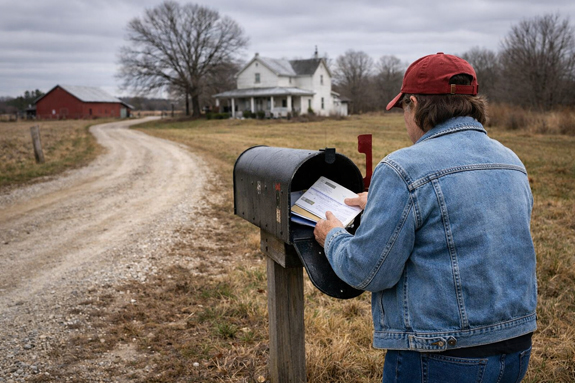 Northern Commissioner Ron Alumbaugh announced in a public statement that the first round of payments — covering the 2020 tax year — has been distributed as prepaid debit cards, with one card issued for each parcel.
“The first installment of the county tax over-collection payback, year 2020, has been mailed,” Alumbaugh stated. “Please watch for it and remove it from your mailbox immediately. One card representing each parcel will be delivered. Many cards contain less than one dollar. The formula for calculation is $1.2 million divided by more than 18,000 parcels, divided by four years. The general revenue tax levy was the only portion involved. The school’s portion was not affected.”
According to the commission, the cards were issued through Rapid Financial Solutions, the third-party vendor contracted to administer the refund program. County officials said the cards can be used as cash, transferred to a bank account, or used to pay for services such as PayPal or Venmo through the card provider.
Alumbaugh also noted that unused balances will not return to the county. After one-year, unused funds may begin to be reduced by card maintenance fees, but unclaimed money is eventually transferred to the State of Missouri’s unclaimed property system in the name of the individual taxpayer.
In a mixed community, emotions following the announcement, many Cedar County residents took to social media to express confusion and frustration, particularly over the use of prepaid cards instead of paper checks and the small amounts some taxpayers received.
One resident asked online, “How much is this method and using a third party costing us taxpayers?”
Another wrote, “Just send us a check. These cards are a pain to deal with and there’s a fee. Make it right, Cedar County.”
Others raised concerns about security, with one commenter claiming the cards could be activated by anyone who had them in hand.
The El Dorado Springs Sun confirmed with county officials that there is no fee charged at the time the card is issued, and no charge to use the card within the first year. Any inactivity fees apply only after the card has remained unused for an extended period and are set by the card provider, not the county.
Residents have also reported receiving cards for as little as a few cents, including $0.16 or $0.38. Officials say the small payments are the result of the required calculation method, which divides the total overcollection across all parcels and tax years involved.
While some community members have expressed frustration with current elected officials, the repayment effort stems from a 2025 Missouri State Auditor’s report that found Cedar County over collected more than $1.2 million in property taxes between 2020 and 2023 due to levy calculation errors in the Cedar County Clerk’s Office at the time.
State Auditor Scott Fitzpatrick reported that the county failed to properly reduce property tax levies as required under Missouri’s sales-tax rollback law for multiple years. The audit determined that the mistake affected the county’s general revenue levy, not school district taxes.
In a previous interview with The El Dorado Springs Sun, Presiding Commissioner Kenneth Thornton said the overcollection was not intentional but acknowledged that the county is responsible for correcting it.
“Our goal is simple — do the right thing,” Thornton said at the time. “We want to make sure taxpayers are reimbursed and that the mistakes that allowed this to happen are corrected.”
Former Cedar County Clerk Heather York, whose office calculated the levy rates during the years involved, said the error began with a spreadsheet formula created early in her term.
“At the time, we were doing everything by hand,” York said in a 2025 interview. “To streamline the process, I created a formulated Excel spreadsheet. Unfortunately, the formula I used was incorrect, and that error carried forward until the audit uncovered it.”
York said the mistake went undetected for longer than usual because the county did not receive a full audit during the COVID-19 pandemic, delaying its discovery.
Why refund cards instead of checks? York also explained in her former interview with the El Dorado Sun that reimbursing taxpayers individually would be difficult due to the number of parcels involved and changes in ownership over time. Because of those complications, the county worked with the state to use an approved repayment method rather than manually issuing checks to thousands of taxpayers.
“This is not a situation where you can simply write a check to the same person who paid the tax,” York said previously. “Properties change hands, parcels are split, and records go back several years. The goal is to return the money in the most efficient and legally acceptable way.
County officials say the refund process will continue in installments for additional tax years, with future distributions expected as calculations are finalized.
As more payments are expected, the commission stated at a community meeting in early January, to which all community members were invited, that the 2020 refunds are only the first phase of the repayment plan. Additional installments covering later tax years will be issued.
Officials are encouraging residents to watch their mail carefully, activate their cards promptly, and contact the card provider directly with questions about balances or transfers.
Cedar County Commission meetings are held each Monday in the commission room at the courthouse and are open to the public. Residents with concerns about the refund process may address the commission during regular meeting hours.


Facebook Comments