
by Melanie Chance
In Cedar County, where small-town connections run deep, and neighbors look out for one another, a critical resource for survivors of domestic violence, sexual abuse, and emotional trauma is available—though many still don’t know it exists.
For nearly two decades, victims seeking safety and support had to look beyond county lines, unaware that vital services were accessible right here at home. But today, thanks to expanded outreach efforts, help is not just available—it’s close to home.
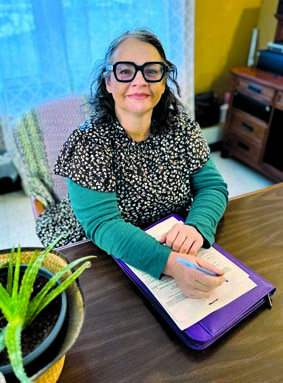 I sat down with Francesca Suarez, an outreach advocate based in Stockton, to discuss the impact of these programs and how they are helping survivors in Cedar County, including El Dorado Springs. Those in Cedar County must understand that this is a service for the entire county and surrounding areas, not just Stockton.
A Stronger Presence in Cedar County
When I asked Francesca how long services had been available locally, she shared some surprising news:
“Our Stockton office actually opened last year, but many people in Cedar County still don’t realize that we’re here,” she said. “We want to change that. Whether you’re in Stockton, El Dorado Springs, or anywhere nearby, we’re here to help.”
The office, located at 811 Owen Mill Rd—Suite C4, is a local access point for survivors, providing a safe space to seek help without needing to travel far.
When I asked what kind of support survivors can receive, Francesca explained:
“We help with immediate shelter placement, food, transportation, legal referrals, job assistance—you name it. Each case is different, and we tailor our support to fit their unique situation.”
She is available four days a week in Stockton, ensuring that survivors in Cedar County have direct access to services.
More Than Just Shelter—A Path to Healing
One of my biggest questions was whether survivors who come to them receive more than just a place to stay. Francesca assured me that their services go far beyond emergency shelter:
“Absolutely,” she said. “We help with everything—getting IDs, transportation, job support, even emotional recovery. Some women and children come in with just the clothes on their backs, so we make sure they have what they need to start over.”
For men in crisis, I asked what options are available.
“Right now, our current shelter is limited to women and children, but that doesn’t mean we turn men away,” she explained. “We provide hotel vouchers, connect them with other resources, and help them find a safe path forward.”
A Community That Cares
Francesca also emphasized the role of community support in keeping these programs running.
When I asked how local residents can help, she said:
“Donations are huge for us. We have a thrift store in Bolivar, Hope’s Closet, that helps fund emergency services. But we also always need things like clothing, bedding, toiletries, and non-perishable food for the people we serve.”
Many survivors arrive with nothing, so every donation—big or small—makes a difference.
Spreading the Word & Breaking the Silence
Toward the end of our conversation, I asked Francesca what the biggest challenge was in reaching survivors. Her response was clear:
“Awareness. So many people in Cedar County don’t know we exist, and that means people who need help may not be getting it.”
She encourages anyone in need—or anyone who knows someone struggling—to reach out.
The main office can be reached at (417) 777-3229, and Francesca is available in Stockton four days a week to help those in crisis.
“No one should have to struggle alone,” she said. “There is hope. And there is help—right here in Cedar County.”


Facebook Comments